
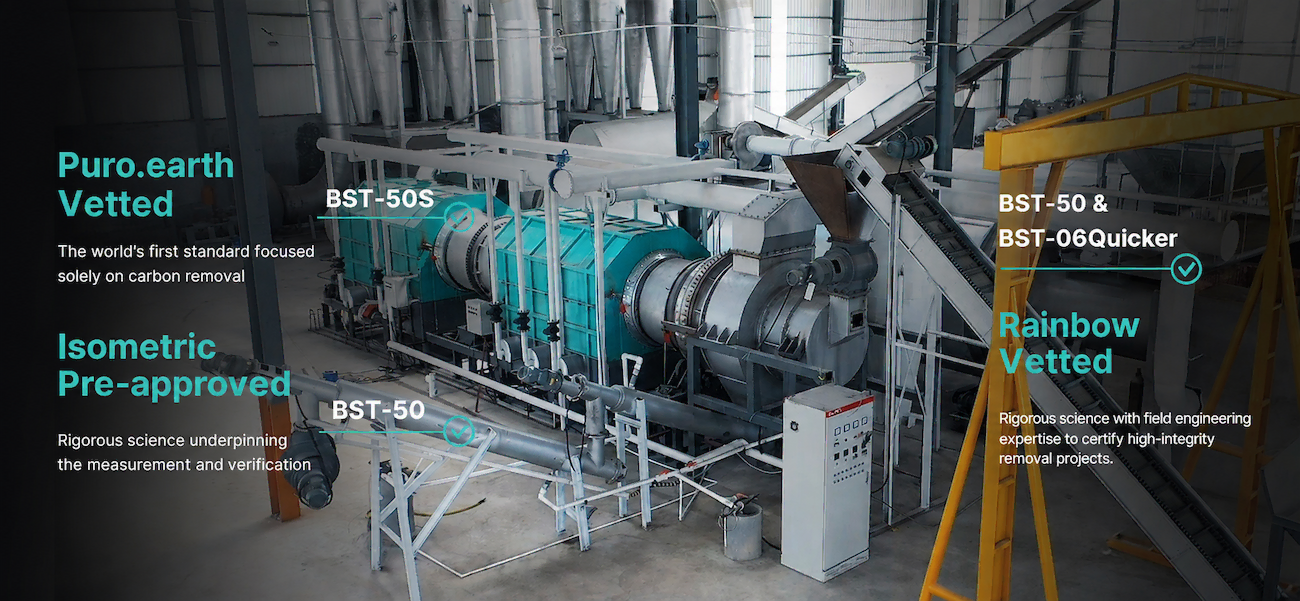
Energy consumption is a major factor influencing the operating costs and thermal efficiency of biochar production. During carbonization, biomass must be heated under oxygen-limited conditions to initiate thermal decomposition and produce carbon-rich solid materials. The required energy depends on feedstock moisture, reactor configuration, heating methods, and operating conditions. Improving heat recovery and fuel utilization can reduce external energy demand while maintaining stable production performance. For equipment manufacturers and project operators, these considerations are essential when evaluating the long-term economics of biochar production.
1. Feedstock Characteristics and Their Influence on Energy Consumption
Different biomass materials have distinct thermal properties, which directly affect carbonization energy requirements. Moisture content is particularly important because water evaporation consumes a considerable amount of heat before the biomass reaches its decomposition temperature.
For example, wet wood chips and freshly collected agricultural residues generally require more preliminary drying than properly conditioned coconut shells. Particle size and bulk density also influence heat penetration and temperature uniformity. A machine for making charcoal must therefore accommodate variations in feedstock characteristics through appropriate pretreatment and feeding arrangements.
Several factors deserve particular attention:
-
Moisture content: Higher moisture increases evaporation-related energy consumption.
-
Particle size: Uniform dimensions promote more consistent heat penetration.
-
Feedstock composition: Different proportions of cellulose, hemicellulose, lignin, and ash influence thermal decomposition.
-
Initial temperature: Preheating biomass can reduce the additional energy required inside the reactor.
Reducing initial moisture through mechanical or thermal drying can lower the reactor’s heat demand. However, the energy consumed by the drying system should also be included when evaluating total production efficiency.
2. Reactor Insulation and Heating System Efficiency
The reactor is the primary thermal component of a biochar production line. Its structural configuration, heating arrangement, and insulation performance determine how effectively energy is transferred to the biomass.
Poor insulation allows heat to escape through the reactor shell, pipelines, and connecting components. These thermal losses increase fuel consumption and may create temperature fluctuations during operation. For a wood charcoal machine, appropriate refractory materials and insulation layers help maintain a stable thermal environment throughout the carbonization process.
Several engineering measures can improve thermal performance:
-
High-temperature insulation: Appropriate refractory and insulation materials reduce heat dissipation.
-
Optimized reactor geometry: Suitable dimensions and heat transfer surfaces promote uniform heating.
-
Sealing performance: Properly designed connections minimize unwanted heat leakage.
-
Automated temperature control: Sensors and control systems regulate heating intensity according to actual operating conditions.
The objective is not simply to increase heating capacity. Efficient equipment should maintain the required carbonization temperature while minimizing unnecessary thermal input.
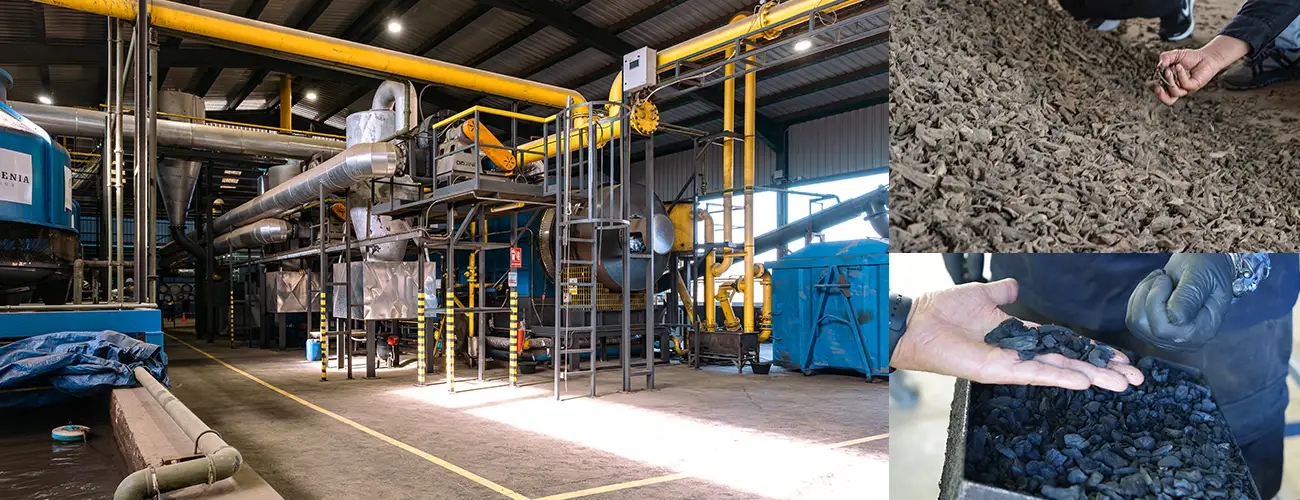
3. Combustible Gas Recovery and Internal Fuel Utilization
Biomass carbonization generates combustible gases as organic components undergo thermal decomposition. These gases may contain hydrogen, carbon monoxide, methane, and other hydrocarbons.
Instead of releasing usable gas directly into the atmosphere, an integrated production system can collect and direct it to a combustion chamber after appropriate treatment. For example, a coconut charcoal machine can incorporate combustible gas recovery to supply part of the reactor’s heating demand after the system reaches stable operating conditions.
This arrangement creates an internal energy circulation mechanism.
Its effectiveness depends on several factors:
-
Gas collection efficiency: Properly designed pipelines and collection systems help minimize gas losses.
-
Combustion stability: Suitable burner configurations support consistent heat generation.
-
Gas purification: Removing particulate matter and condensable contaminants helps protect combustion equipment.
-
Fuel regulation: Automated controls balance recovered gas supply with actual reactor heat demand.
The available gas quantity and calorific value vary with feedstock composition and operating temperature. Consequently, auxiliary fuel may still be necessary during startup or periods of insufficient gas generation.
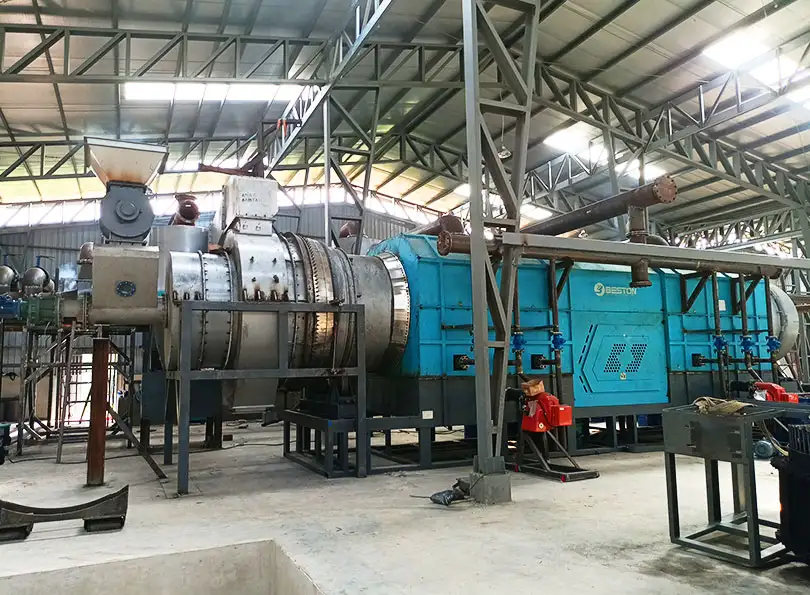
4. Waste Heat Recovery and Thermal Integration
Apart from combustible gas, carbonization systems generate substantial quantities of residual heat. Hot exhaust gas, reactor surfaces, and discharged charcoal can all represent potential thermal energy sources.
Heat recovery equipment can redirect part of this energy into other production stages. In a rice husk carbonizer, for instance, recovered exhaust heat can be integrated with the feedstock drying process to reduce the additional energy required for moisture removal.
Common strategies include:
Feedstock preheating: Recovered heat raises biomass temperature before it enters the reactor, reducing the subsequent heating requirement.
Drying system integration: Hot exhaust gas supplies thermal energy to a biomass dryer, particularly when processing agricultural residues with relatively high moisture content.
Combustion air preheating: Heat exchangers transfer energy from exhaust streams to incoming combustion air, improving fuel utilization.
Thermal management during cooling: Controlled cooling arrangements reduce uncontrolled heat losses and help maintain safe product discharge conditions.
The performance of these systems depends on exhaust temperature, heat exchanger design, gas composition, and operating conditions. Dust accumulation, corrosion, and maintenance accessibility must also be considered during equipment selection.
5. Operational Management and Energy Performance Monitoring
Even a well-designed production line can experience excessive energy consumption if operating conditions are inconsistent. Frequent shutdowns, irregular feeding, insufficient maintenance, and unstable reactor temperatures can all reduce thermal efficiency.
Operators should monitor several performance indicators:
-
Fuel consumption per ton of biomass processed.
-
Electricity consumption of auxiliary equipment.
-
Reactor temperature and heating duration.
-
Feedstock moisture content.
-
Combustible gas recovery and utilization rates.
-
Heat exchanger performance and exhaust temperature.
Comparing these indicators over different production periods helps identify abnormal energy losses and evaluate the effectiveness of operational adjustments.
Regular maintenance of burners, insulation, gas pipelines, and heat exchangers is equally important for preserving designed performance. Consistent operating procedures also help reduce unnecessary startup energy consumption and maintain predictable production conditions.
Conclusion
Biochar machine energy consumption is determined by the combined effects of feedstock characteristics, reactor design, heating efficiency, and operational management. Effective gas recovery reduces dependence on external fuel, while waste heat integration improves overall thermal utilization. By combining appropriate insulation, automated temperature regulation, feedstock pretreatment, and systematic energy monitoring, a biochar production line can achieve more efficient operation, lower energy costs, and improved long-term production stability.

