

Waste management is increasingly moving beyond disposal and toward resource recovery. Among the technologies enabling this transition, biochar production equipment provides a particularly direct link between biomass waste treatment and carbon management. By converting agricultural residues, forestry by-products, and other organic materials into stable carbon-rich biochar through controlled pyrolysis, the process can simultaneously reduce waste volumes, produce a usable material, and create a pathway toward carbon credit generation.
From Biomass Waste to Stable Carbon
Conventional biomass disposal methods can leave substantial amounts of organic carbon vulnerable to decomposition. Depending on the disposal route, this carbon may eventually return to the atmosphere as carbon dioxide or methane. A pyrolysis-based system takes a different approach.
A pyrolysis machine for biochar heats biomass under oxygen-limited conditions. Instead of allowing the feedstock to decompose conventionally, thermal conversion transforms part of its organic structure into a carbon-dense solid. The resulting biochar contains a relatively recalcitrant form of carbon that can remain stable for considerably longer than the original biomass when appropriately produced and applied.
This creates a useful waste-management loop: biomass waste → pyrolysis → biochar → carbon storage and utilization.
The process also generates combustible gases and, depending on the system configuration, condensable products. These by-products can potentially contribute to the plant’s thermal energy requirements, improving overall resource efficiency.
How Biochar Creates a Carbon Credit Opportunity
The connection between biochar and carbon credits depends on measurable and verifiable carbon removal. Not every kilogram of biochar automatically represents a carbon credit. Project developers generally need to demonstrate factors such as feedstock origin, production conditions, biochar characteristics, carbon content, end use, and long-term carbon stability under an applicable methodology.
This is where process control becomes important.
A properly engineered biochar machine for sale can provide traceable operating parameters, consistent thermal conditions, and documented production data. Such information can support the monitoring, reporting, and verification processes required by carbon-credit programs.
The carbon pathway can therefore extend beyond waste treatment. When qualifying biochar is placed in an appropriate long-term application, a portion of the carbon originally absorbed by biomass can be retained outside the atmosphere, creating the basis for potential carbon-removal claims.
The Role of Equipment Selection
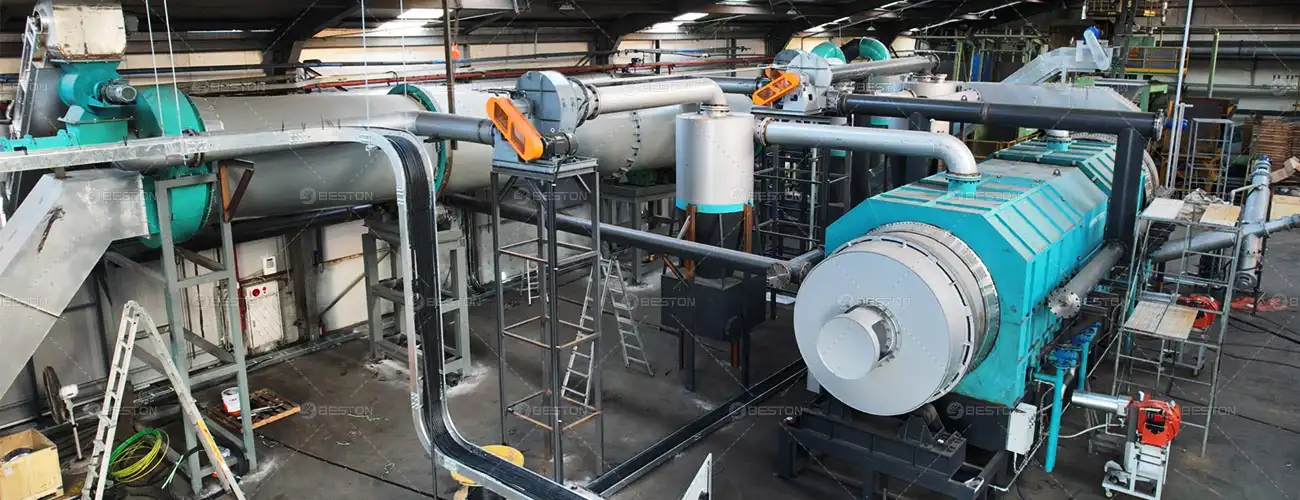
Equipment selection has a material effect on project economics and carbon-accounting potential. Businesses evaluating a biochar machine for sale should look beyond nominal processing capacity and examine feedstock adaptability, thermal efficiency, residence-time control, emissions management, char quality, and data-recording capabilities.
A small agricultural operation may require a compact system for localized residue processing. A larger project, by contrast, may require a continuous configuration capable of handling substantial quantities of biomass with stable operating conditions.
Experienced charcoal making machine manufacturers can provide different reactor configurations according to feedstock characteristics and required output. However, equipment should not be selected solely according to production volume. Consistent biochar quality is equally important when the project intends to pursue carbon-removal certification.
Integrating Waste Management and Carbon Economics
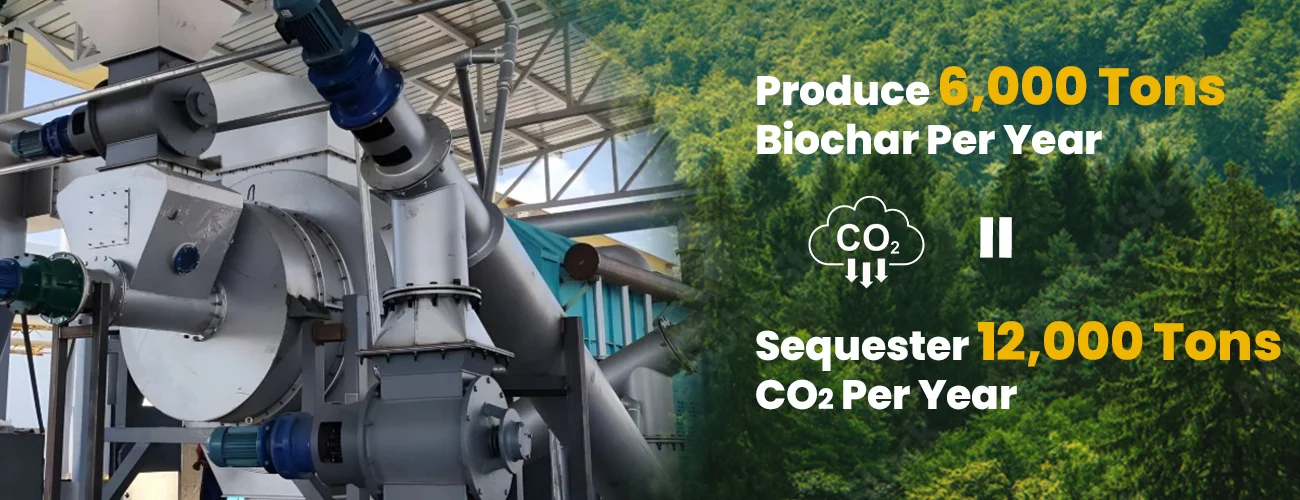
A biomass pyrolysis plant for sale can become more than a waste-processing asset when its operation is integrated into a broader carbon-management strategy. Agricultural residues that previously had limited economic value can become feedstock for biochar production. The biochar can then enter agricultural, soil-management, or other suitable applications, while documented carbon storage may create an additional revenue stream where eligibility requirements are satisfied.
This model effectively separates value into several layers:
- Waste management value: Reduces the volume of biomass requiring disposal.
- Material value: Converts low-value residues into usable biochar.
- Energy value: Recovers combustible gases generated during pyrolysis.
- Carbon value: Creates potential eligibility for verified carbon-removal credits.
- Agricultural value: Biochar may be used in suitable soil and nutrient-management applications.
The result is a more circular economic architecture in which waste becomes feedstock, carbon becomes a measurable asset, and the treatment process generates multiple forms of value.
Building a Verifiable Biochar Project
Carbon-credit revenue should be treated as a project component rather than an automatic consequence of purchasing equipment. Feedstock traceability, production records, laboratory characterization, chain-of-custody documentation, and evidence of durable carbon storage can all influence project eligibility.
For this reason, the strongest biochar projects integrate equipment engineering with carbon-accounting requirements from the outset. A technically capable pyrolysis system provides the foundation, while rigorous monitoring and verification establish the credibility of the resulting carbon-removal claims.
Biochar production equipment therefore occupies an important intersection between waste management, resource recovery, and carbon removal. When technology, feedstock management, end-use planning, and verification are properly coordinated, biomass waste can move from a disposal liability toward a measurable environmental and economic resource.

